
 By Manvindar Singh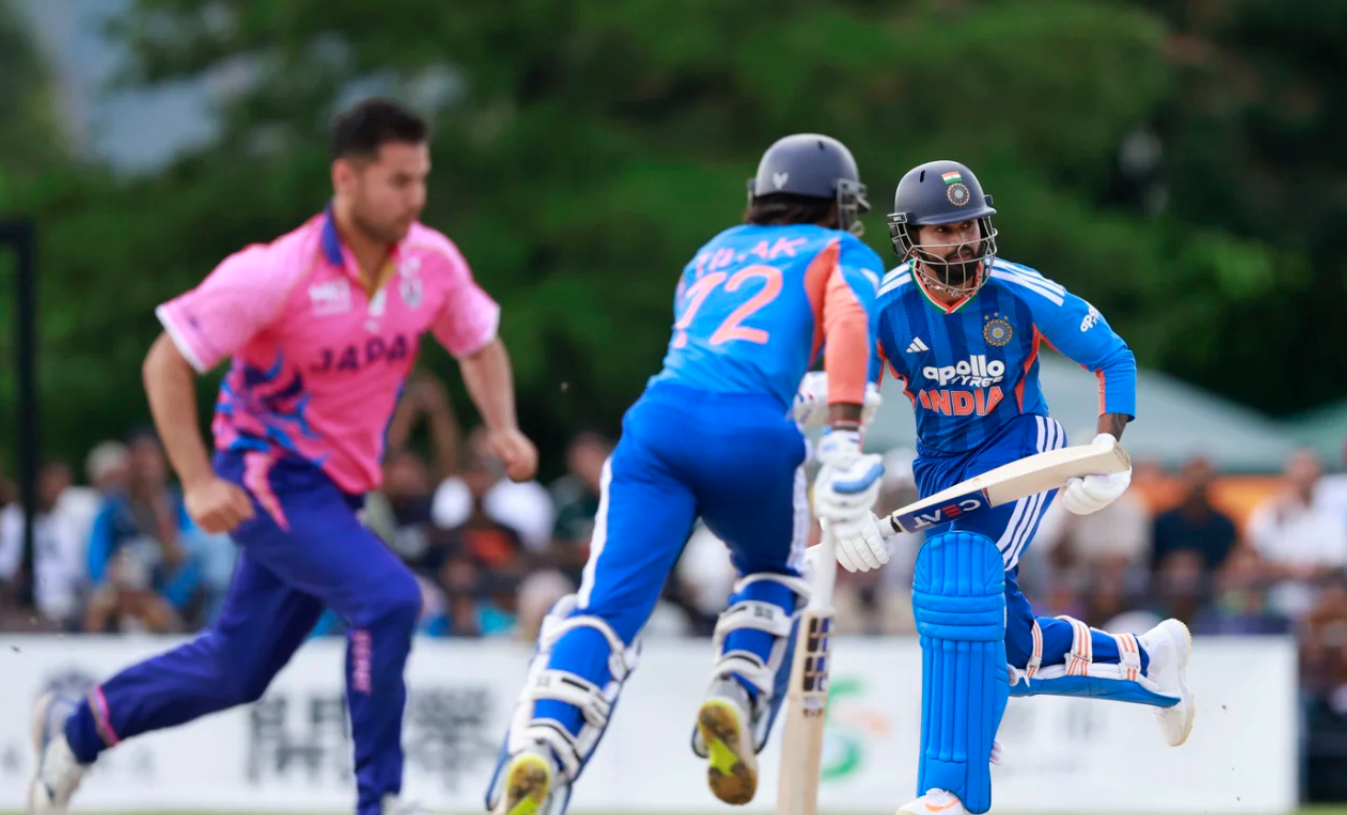
India survived a major scare against Japan to secure a thrilling two-run victory in the only T20I at the Sano International Cricket Ground on September 22, 2026, after wet conditions reduced the contest to just five overs per side.
In an unusually short international encounter, India could manage only 32 for 4 from their five overs after Japan’s bowlers produced an impressive performance against a powerful batting line-up. Captain Shreyas Iyer top-scored with 16 from 12 balls, while Japan’s Charlie Hara-Hinze claimed two wickets to give the hosts a genuine opportunity to record a memorable upset.
Chasing only 33, Japan remained in contention until the final delivery but finished on 30 for 3, falling agonisingly short. Washington Sundar took 2 for 13, including the crucial wicket of Japan captain Kendel Kadowaki-Fleming, while India’s fielding and disciplined spin bowling ultimately proved enough to defend one of the smallest totals imaginable in a five-over shootout.
Japan Put India Under Immediate Pressure
India elected to bat first after winning the toss, but the shortened format left virtually no time for the visitors to settle.
Japan struck in the opening over when Abhishek Sharma was dismissed for a first-ball duck, caught by Shoma Sugaya-Slater off Hara-Hinze. Sanju Samson briefly looked to inject some momentum into the innings, scoring nine from seven deliveries with one boundary.
His stay was also cut short, however, when Ibrahim Takahashi removed him with India on 9 for 2.
Japan continued to apply pressure through accurate bowling and sharp fielding. Ishan Kishan made only three from six balls before Benjamin Ito-Davis dismissed him, leaving India struggling at 14 for 3 after 2.4 overs.
With only a little more than two overs remaining, India desperately needed their middle order to find some acceleration.
Shreyas Iyer Gives India Something to Defend
Shreyas Iyer provided the most important contribution of the innings.
The Indian captain scored 16 from 12 deliveries, including one four, and helped lift the total beyond 30 despite Japan refusing to allow the visitors any sustained momentum.
Iyer was dismissed from the penultimate delivery of the innings, caught by Makoto Taniyama off Hara-Hinze. Tilak Varma finished unbeaten on one, while Shivam Dube was yet to score as India closed on 32 for 4 from five overs.
Hara-Hinze was Japan’s most successful bowler with 2 for 17 from two overs, while Takahashi returned 1 for 13.
Ito-Davis delivered perhaps the most economical spell of the innings, conceding just two runs from his solitary over while taking the wicket of Kishan.
Japan had restricted India to a modest target, and an upset was suddenly within reach.
Japan Lose Early Wickets in Chase
Japan needed 33 from five overs, meaning the required rate stood at 6.60 runs per over — manageable in normal circumstances but far more demanding in a contest where every dot ball carried significant weight.
India immediately created pressure.
Lachlan Yamamoto-Lake was run out by Ishan Kishan for one in the opening over, leaving Japan 2 for 1.
Ibrahim Takahashi responded with a boundary during his three-ball stay, but Washington Sundar removed him for four, with Ravi Bishnoi taking the catch.
Japan were suddenly 7 for 2 after 1.4 overs, and India had regained control of the match.
Kadowaki-Fleming Keeps Japan Alive
Captain Kendel Kadowaki-Fleming led Japan’s attempt to recover.
He scored 12 from 12 balls and, together with Benjamin Ito-Davis, gradually moved Japan back into contention. With such a small target, Japan did not require a barrage of boundaries; they simply needed to keep the scoreboard moving and avoid losing further wickets.
The partnership carried Japan to 25 for 2 by the end of the fourth over, leaving eight runs required from the final six deliveries.
But the final ball of Washington Sundar’s second over produced the decisive breakthrough.
Kadowaki-Fleming attempted to keep the chase moving but was caught by Yash Thakur for 12. His dismissal left Japan needing eight from the final over with a new batter joining Ito-Davis.
India Hold Their Nerve in Final Over
Ravi Bishnoi was entrusted with defending eight runs from the final six balls.
Japan continued to push for the target through Ito-Davis and Shirai-Patmore, but India managed to prevent the boundary that could have completely changed the outcome.
Ito-Davis remained unbeaten on nine from eight deliveries, while Shirai-Patmore finished two not out from three.
Japan collected five runs from the final over but could not find the additional three required for victory, ending their five overs on 30 for 3.
India had escaped with a two-run victory.
Washington Sundar Makes the Difference
In a match where just a handful of deliveries could determine the result, Washington Sundar’s spell proved particularly important.
The off-spinner returned figures of 2 for 13 from two overs, accounting for Takahashi and Kadowaki-Fleming. The latter wicket was especially significant because it came immediately before the final over.
Axar Patel also played an important role in squeezing Japan’s chase, conceding only seven runs from his two overs. His economy helped ensure Japan entered the final over still needing eight.
Bishnoi conceded 10 from his only over but successfully protected the target as India completed a narrow win.
For Japan, the result represented a strong performance despite defeat. Their bowlers reduced an Indian batting order featuring Samson, Abhishek, Kishan, Iyer, Tilak and Dube to just 32, before their batters pushed the visitors all the way to the final delivery.
India vs Japan Only T20I – Match Summary
India: 32/4 in 5 overs
Shreyas Iyer: 16 (12)
Sanju Samson: 9 (7)
Charlie Hara-Hinze: 2/17
Benjamin Ito-Davis: 1/2
Japan: 30/3 in 5 overs
Kendel Kadowaki-Fleming: 12 (12)
Benjamin Ito-Davis: 9* (8)
Washington Sundar: 2/13
Axar Patel: 0/7
Result: India won by 2 runs
Venue: Sano International Cricket Ground
Date: September 22, 2026
Match: Only T20I, India tour of Japan 2026
 Anas Ahmed
  Himadullah Sohoo